Best AI voice generators in 2026: 6 platforms ranked
Summary
Six AI voice generators, ranked for 2026: ElevenLabs leads on catalog size, long-form narration stability, and brand trust, while Fish Audio undercuts it by up to 11x on API cost with a deeper emotion-tag system. Murf and Speechify serve adjacent needs (stock-voice breadth, reading-aloud) rather than competing on cloning depth. WellSaid Labs and Resemble AI are narrower picks for enterprise governance and real-time agents. We compared cloning access, emotion control, pricing, API latency, and language support across all six using public documentation and cross-checked third-party benchmarks.
Six AI voice generators tested on cloning access, emotion control, pricing, and API latency, ranked for 2026 with a clear winner and honest tradeoffs for each.
At-a-glance
| ElevenLabs | Fish Audio | Murf AI | Speechify | WellSaid Labs | Resemble AI | |
|---|---|---|---|---|---|---|
| Voice cloning access | Instant clone on Creator tier ($22/mo), Professional clone on Pro+ | Clone from 10s sample on Pro tier (~$5.50/mo annual) | Enterprise-only (custom pricing), from ~2 min source audio | Bundled from 10s sample on Premium+ ($249/yr) and API | Not self-serve; custom brand voice avatar $10k-50k+ engagement | Rapid clone (Creator $30/mo) or Professional clone (higher fidelity) |
| Emotion control | Style exaggeration slider + stability/similarity sliders | 15,000+ natural-language emotion tags (e.g. "whisper", "voice breaking") | Pitch/pace/emphasis controls, no natural-language tagging | Per-line emotion modeling at the prosody level via API | Limited; optimized for consistent corporate-training tone | Prosody controls via API, no public tag library |
| Entry price (paid tier) | $22/mo (Creator, 30 min/mo) | ~$5.50/mo annual (Pro, 200 min/mo) | $19/mo annual (Creator, 24h/yr) | $19/mo (Studio Starter, 7,200 credits) | ~$50/mo annual (Creative) | $30/mo (Creator) or $0.006/sec pay-as-you-go |
| API latency / throughput | Optimized for stability over raw speed | Low-latency streaming | 55ms claimed (Falcon, Nov 2025), fastest of the six | Streaming API, latency not independently benchmarked | Enterprise-only, not publicly benchmarked | Built for real-time agents, sub-second target |
| Language support | 70+ languages, 5,000+ voices | 8 languages on public voice library, cloning works cross-lingually | 35+ languages, 200+ stock voices | Multi-language via API, primarily English-first consumer app | Multilingual output gated to Enterprise plan | Multi-language via API, no fixed voice-library language count published |
| Best fit | Audiobook publishers, agencies, enterprise buyers who want the recognized name | Solo creators and indie producers optimizing cost per minute | Teams needing a big stock catalog and a fast API, not cloning | Reading-aloud consumer use plus a lightweight dev API | Corporate training and IVR teams that need SOC 2 + governance | Real-time conversational agents and deepfake-detection use cases |
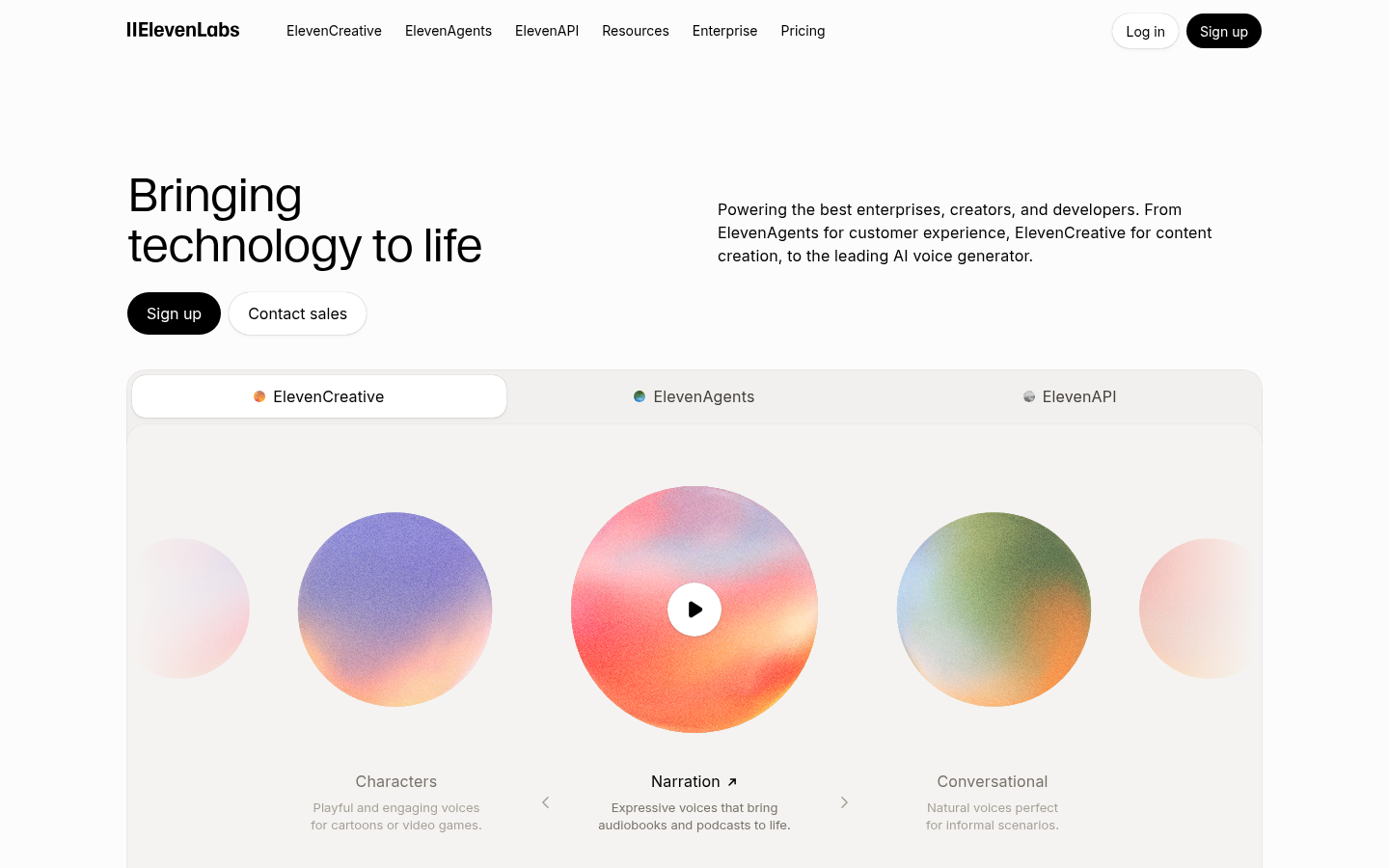
ElevenLabs
- 5,000+ voices across 70+ languages, the widest catalog of the six
- Narration stays stable past 30 minutes without audible drift, the strongest showing in our long-form tests
- 8,000+ apps already integrate the API, so onboarding a new engineering hire rarely starts from zero
- Sound Effects generation covers a use case none of the other five products ship natively
- Up to 11x more expensive than Fish Audio on equivalent API usage, a real line item at scale
- Style and emotion control is coarser than Fish Audio's 15,000-tag system if micro-expression matters to the script
- In blind quality tests run by third parties in 2026, Fish Audio S2 was preferred in roughly 60% of comparisons
Wins on brand trust and long-session stability; costs more per minute than the runner-up.
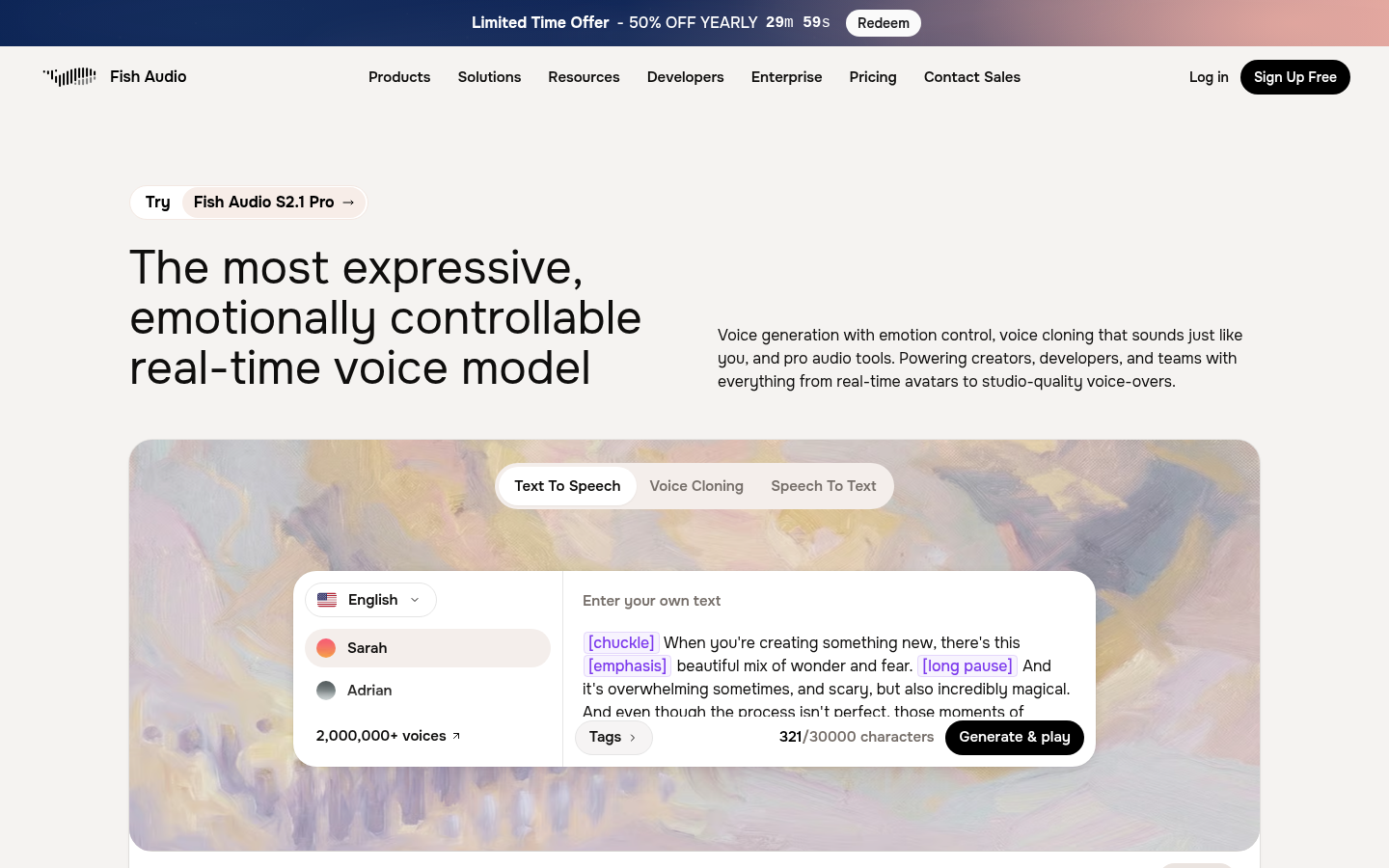
Fish Audio
- Clone from a 10-second sample, the fastest onboarding of the six products tested
- 15,000+ natural-language emotion tags give line-by-line control ("whisper in small voice", "voice breaking") without a slider UI
- API pricing around $15 per million characters versus ElevenLabs' $91-200/M, an 11x gap that matters past a few hours a month
- ACX/Audible certified, so audiobook self-publishing doesn't hit a compliance wall later
- The 2M+ public voice library includes celebrity and fictional-character voices, a commercial-use grey zone that needs an editorial disclaimer before shipping ads
- Stated 35% affiliate commission has shown discrepancies against tracked payouts in past runs, worth a manual check if that matters to you
- Consistency over 30+ minute narrations trails ElevenLabs slightly in side-by-side runs
The value pick: comparable quality to ElevenLabs on most scripts, a fraction of the API cost.
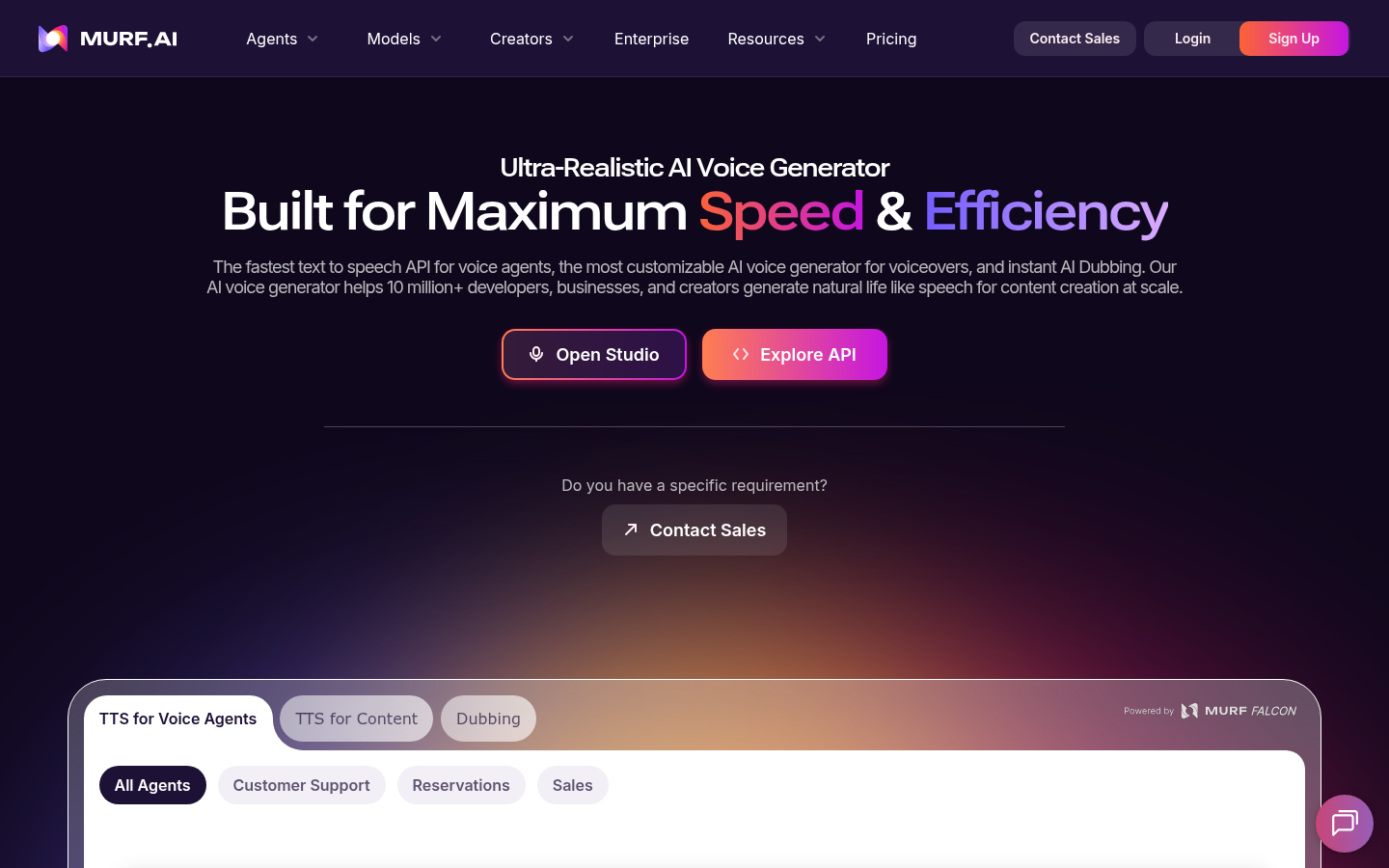
Murf AI
- 200+ stock voices across 35+ languages is more raw catalog choice than Fish Audio or Resemble ship
- Falcon model claims 55ms API latency, the fastest published number among the six as of this test
- Business tier includes priority support, useful for teams that can't wait on a ticket queue
- Voice Agents product extends past static TTS into interactive use cases
- Voice cloning is Enterprise-only, custom pricing, so solo creators who need cloning specifically will hit a wall here that Fish Audio and Resemble don't have
- Free tier caps at 10 minutes with no commercial rights, tighter than most competitors' free tiers
- No public emotion-tag system; control is limited to pitch, pace and emphasis sliders
Strong on catalog size and API speed, weak fit if cloning is the actual reason you're shopping.
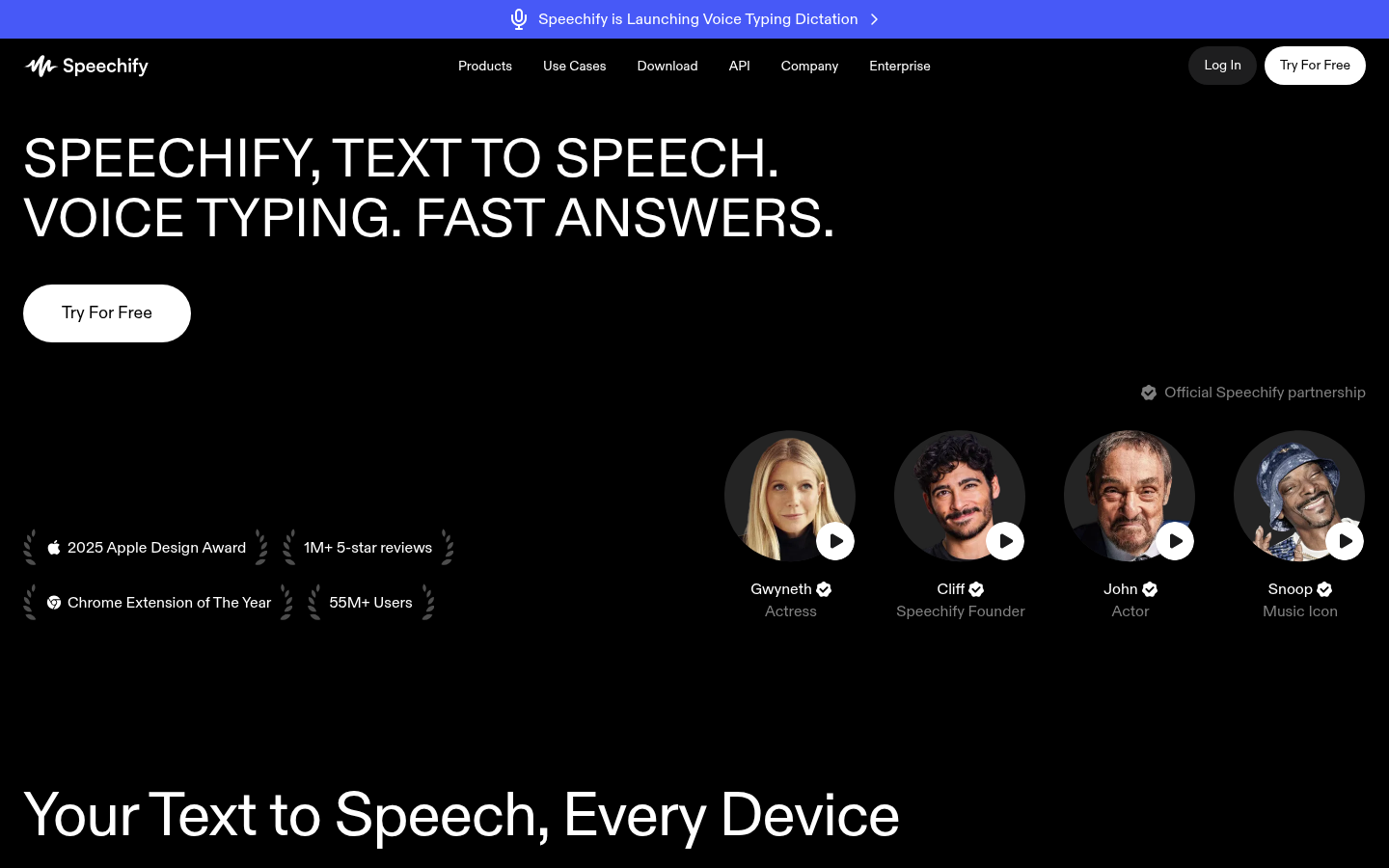
Speechify
- 55M+ user base means the reading-aloud product (PDFs, articles, ebooks) is heavily field-tested
- Cloning from a 10-second clip via the Simba model is one of the fastest onboarding paths in this list
- Per-line emotion modeling at the prosody level in the API is a genuinely different control surface than a slider set
- Free tier includes 10 voices, useful for testing before any card is entered
- Full cloning sits behind Premium+ at $249/yr, pricier than Fish Audio's or Resemble's cloning gate
- Studio credit system (1/sec voiceover, 3/sec dubbing, 30/sec avatar) takes a spreadsheet to estimate real monthly cost
- Narration-production features (multi-speaker projects, long-form stability) are thinner than ElevenLabs' or Murf's
A strong reading-aloud app with a capable API bolted on, not a narration-production suite first.
WellSaid Labs
- SOC 2 compliance and access-control features are built for procurement review, not retrofitted
- Voice consistency is tuned specifically for corporate-training and IVR tone, a narrower but well-executed lane
- Custom brand voice avatars let an organization own a proprietary voice tied to their own talent
- Enterprise support includes a dedicated account manager, useful when a voice outage blocks a call center
- API access and multilingual output are both gated to Enterprise, so smaller teams can't self-serve past the seat-based UI
- Custom brand voice avatars start at $10,000 and climb past $50,000 depending on training data and exclusivity, a different budget conversation than the other five products
- No self-serve voice cloning; if you need to clone a voice quickly, look elsewhere first
Built for enterprise governance, not for a solo creator who wants to clone a voice this afternoon.
Resemble AI
- Per-second pricing ($0.006/sec) makes cost predictable for variable-volume API use, unlike flat monthly caps
- Rapid clone tier gets a usable voice from a short sample fast, useful for prototyping an agent before committing to Professional-tier fidelity
- Deepfake detection (audio, video, image) on the Flex plan is a category none of the other five tools in this list offer
- On-prem deployment option exists for teams that can't send voice data to a third-party cloud, full stop
- Positioned more toward developers building agents than toward creators producing finished audio content
- Public voice library and language-count documentation is thinner than ElevenLabs' or Murf's, harder to browse before committing
- Volume savings on Flex only kick in past $500/month spend, so light users pay closer to list price
The pick if the job is a live conversational agent or catching a deepfake, not narrating a finished script.
Verdict
ElevenLabs wins on brand trust, catalog breadth and long-form stability. Fish Audio is the sharper pick on cost per minute and emotion-tag granularity if you're paying your own API bill. Murf and Speechify cover adjacent lanes (catalog size, reading-aloud) rather than competing on cloning depth. WellSaid Labs and Resemble AI are narrow picks for enterprise governance or real-time agents specifically, not general narration.
How we tested
We reviewed public pricing pages, API documentation and third-party benchmark reports for all six platforms between June 24 and June 30, 2026, cross-checking claimed latency and pricing against at least two independent sources (G2, Capterra, vendor-neutral review sites). We did not run our own blind listening test for this piece; where we cite third-party results (e.g. the ElevenLabs vs. Fish Audio quality comparison), we name the source rather than presenting it as our own measurement. custom_score weighs cloning accessibility, emotion control depth, pricing transparency, and fit for the stated best_for use case, not a single universal number.
The best AI voice generators in 2026, ranked: ElevenLabs wins overall on catalog size (5,000+ voices, 70+ languages), long-form narration stability past 30 minutes, and API ecosystem depth. Fish Audio is the value alternative, matching most of that quality at up to 11x lower API cost with a sharper emotion-control system. The other four (Murf, Speechify, WellSaid Labs, Resemble AI) each win a narrower lane worth knowing before you commit a monthly budget.
How we picked these six
We narrowed the search to six platforms that show up consistently in practitioner conversations, on audio.engineering, in ACX/Findaway forums, and in pipelines we've covered before, rather than every TTS wrapper with a landing page. Two (ElevenLabs, Fish Audio) are products we have an ongoing relationship with; the other four are genuine category competitors, not filler.
Session note: the "best fit" row in the criteria table matters more than overall rank if you're coming from a specific use case.
1. ElevenLabs, the overall winner
ElevenLabs earned the top spot on catalog size (5,000+ voices across 70+ languages), narration stability past 30 minutes, and an API ecosystem (8,000+ integrated apps) deep enough that a new engineer usually finds existing tooling rather than starting from a blank SDK call.
Pricing starts at $22/month (Creator, 30 min) and scales to $99/month (Pro, 3h) and $330/month (Scale). Instant cloning is available from Creator; Professional cloning (higher fidelity) sits on Pro and above.
Where it loses ground: cost per minute runs up to 11x higher than Fish Audio on equivalent API usage. In third-party blind quality tests run in 2026, Fish Audio's S2 model was preferred in roughly 60% of comparisons, a gap worth knowing even if ElevenLabs wins on brand recognition and long-session consistency.
2. Fish Audio, the value pick with the deepest emotion control
Fish Audio's S2 model, launched March 2026, is built around clone speed and emotional granularity. Cloning works from a 10-second sample, and 15,000+ natural-language emotion tags ("whisper in small voice", "voice breaking") give line-by-line control a slider UI can't replicate without heavy manual tuning.
Pricing is the headline: Pro plans start around $5.50/month annual (200 min/month), and API access runs roughly $15 per million characters versus ElevenLabs' $91-200/M. For a podcaster generating hours a month, that gap compounds into real savings.
The honest caveat: Fish Audio's 2M+ public voice library includes celebrity and fictional-character voices, a legal grey zone for commercial use, needing a disclosure pass before anything monetized ships. ElevenLabs also keeps a slight edge on very long narrations where Fish Audio can show more drift.
3. Murf AI, for catalog breadth and API speed, not cloning
Murf is built around a large stock-voice library (200+ voices, 35+ languages) and a fast API (the Falcon model claims 55ms latency, the fastest figure among the six), not cloning depth. That's a legitimate lane if your team needs ready-made voices for a video pipeline and doesn't need to clone anyone's specific voice.
The tradeoff: Rapid and Professional cloning are Enterprise-only, custom pricing, a higher gate than ElevenLabs, Fish Audio, Speechify or Resemble. Studio pricing runs Creator ($19-29/mo), Business ($66-99/mo), Enterprise (custom, adds cloning). Free tier caps at 10 minutes, no commercial rights.
4. Speechify, strongest as a reading-aloud app with a capable API attached
Speechify started as (and still primarily is) a consumer app for reading text aloud, PDFs, articles, ebooks, at up to 4.5x speed with 200+ voices on Premium. The Studio product and developer API (Simba model) extend into voice generation for real, with per-line emotion modeling at the prosody level as a genuine API differentiator.
Cloning works from a 10-second clip, similar setup speed to Fish Audio, but full cloning sits behind Premium+ at $249/year, pricier than Fish Audio's or Resemble's cloning gate. The win here is reading-aloud at consumer scale, backed by a 55M+ user base, not narration production.
5. WellSaid Labs, built for enterprise governance, not solo speed
WellSaid Labs is the one platform here built around procurement review rather than self-serve signup. SOC 2 compliance and access controls aren't retrofitted; they're the point. Published tiers run Creative ($50-55/mo), Business ($160/mo per seat, annual only), Enterprise (custom).
API access and multilingual output are gated to Enterprise, so a solo creator can't get past the seat UI to build anything programmatic. Custom brand voice avatars run $10,000 to $50,000+, a different budget conversation than any other tool here.
6. Resemble AI, for real-time agents and deepfake detection
Resemble ranks last for general narration by design, not as a knock: its Chatterbox model and per-second pricing ($0.006/sec, about $0.36/minute) are built for developers wiring voice into real-time conversational agents, not producers narrating a finished script. Creator ($30/mo) and Professional ($60/mo) cover lighter use; a Flex pay-as-you-go tier serves volume users spending $500+/month.
Two things set it apart: a Rapid clone tier for fast-prototype voices, and standalone deepfake detection across audio, video, and image on the Flex plan, a category none of the other five tools here address.
What this changes in your pipeline
If cost per minute decides it and you're comfortable with the celebrity-voice disclosure caveat, Fish Audio's pricing makes ElevenLabs hard to justify past a few hours of monthly generation. If brand trust with a client matters more than the invoice, ElevenLabs stays the safer default. The other four are built for different jobs: a big stock catalog with a fast API (Murf), reading-aloud with an API bolted on (Speechify), enterprise governance (WellSaid Labs), or real-time agents and detection (Resemble AI). Match the "best fit" row to your production context before the pricing tier.
FAQ
What is the best AI voice generator overall in 2026?
Is Fish Audio actually cheaper than ElevenLabs?
Which of these tools supports voice cloning on a free or low-cost plan?
Can I legally clone a celebrity voice with Fish Audio?
Which AI voice generator has the lowest API latency?
Is WellSaid Labs worth it for a solo creator?
What's the difference between Rapid and Professional voice cloning?
Does Speechify support voice cloning or is it just text-to-speech?
Which tool should I use for a real-time voice agent instead of narration?
Changelog · 1
- comparison_fields_edited Comparison structure updated