Suno alternatives in 2026: 4 AI music tools tested
Summary
If you're weighing Suno alternatives, the choice comes down to what you're actually generating. Udio wins on production control and track length, up to 10 minutes at 48kHz, Stable Audio wins on licensing certainty since its training data was licensed from day one, and AIVA and Soundraw both skip vocals entirely in favor of instrumental scoring and background beds. Suno still leads on vocal realism and a generous free tier, but its Trustpilot score sits low over billing complaints.
Suno alternatives worth testing in 2026: Udio, Stable Audio, AIVA, and Soundraw. Udio is the strongest overall pick for anyone past the beginner stage: 48kHz stereo output, 10-minute tracks without drift, and a settled UMG and Warner licensing deal make it the closest thing to a production-grade rival. Suno still wins on vocal realism and ease of use. Stable Audio, AIVA, and Soundraw sidestep the licensing gray zone entirely by training only on data they own outright.
Why look past Suno in the first place
Suno's v5.5 model still produces the most convincing sung vocals in this comparison: the breathiness, the small pitch cracks, the phrasing that follows lyrics naturally. That is not in question. What pushes people to look at Suno alternatives is usually one of three things: you need longer, drift-free instrumental sections than Suno's extend feature comfortably delivers; you need a training-data story you can defend to a client or legal team; or you are hitting Suno's account and billing friction that shows up repeatedly in its Trustpilot reviews (the aggregate score sits around 1.5 out of 5, on several hundred reviews, and the recurring complaint is billing and sudden account suspensions rather than output quality).
The licensing landscape changed again in 2026
Suno and Udio both settled with the major labels in 2025 after the RIAA's 2024 infringement suit, which is the reason both platforms can now offer commercial-use rights on paid plans at all. That did not end the legal exposure, though. In mid-2026, the American Federation of Musicians sued Universal Music Group and Warner Music, alleging member recordings were licensed to Suno and Udio without artist compensation or credit. Read the licensing row in the table above with that context: "settled" does not mean "closed."
That backdrop is exactly why Stable Audio, AIVA, and Soundraw compete on a different axis. None of them train on scraped commercial catalogs, so none of them carry the same legal question mark, even if none of them match Suno on vocal realism.
Udio: the closest thing to a production tool
Udio's 48kHz stereo output and 10-minute maximum duration without the melodic drift that shows up in shorter-context generators make it the pick for anyone doing more than dropping a prompt and downloading the result. The timeline inpainting feature, regenerating one 8-bar section without touching the rest of the track, is the single most useful production feature in this comparison. It is genuinely better than Suno for cinematic and orchestral instrumental work, and its own UMG and Warner settlement puts it on the same commercial footing as Suno.
The session note: Udio's free tier gives you roughly 3 songs a day against Suno's 50 daily credits. If you are still evaluating whether Udio's workflow fits before paying, budget more days for the same number of test generations.
Stable Audio: pick this when licensing has to be bulletproof
Stable Audio's differentiator is not audio quality, it is training data. The model family is built exclusively on data Stability AI has the rights to, which means there is no RIAA-style question mark to explain to a client or a legal team. That makes it the strongest pick for ad agencies, game studios, and anyone shipping commercial work under scrutiny. The tradeoff: it is not built for vocal-driven songwriting, and its enterprise API tier is priced on request rather than published as a flat subscription tier the way Suno, Udio, and AIVA are.
AIVA and Soundraw: when you do not need vocals at all
AIVA and Soundraw both skip vocal generation entirely, which immediately rules them out if you need a sung track, but makes them worth a serious look for background scoring. AIVA leans cinematic and orchestral, with 250-plus style presets and a piano-roll editor for manual fixes after generation, and it was the first AI recognized as a composer by a music rights society (SACEM, back in 2016). Soundraw leans toward video-editing workflows: an in-browser mixer for swapping instruments and adjusting section energy, stem downloads for ducking music under dialogue, and a training story (in-house recorded catalog only) that keeps licensing risk close to zero.
The tradeoff on Soundraw specifically: once you generate more than a handful of tracks in the same genre, the melodic and drum-fill patterns start repeating in ways that are easy to notice if you are using multiple tracks in the same project. AIVA's tradeoff is pricing structure: the Standard plan restricts monetization to YouTube, Twitch, TikTok, and Instagram, and only the Pro plan hands you full copyright.
Which one to actually pick
If your workflow is vocal-first, stay on Suno and budget for the account and billing friction that shows up in its reviews. If you are doing longer-form instrumental or cinematic work and want a production tool rather than a prompt box, move to Udio. If a client or legal team needs a clean licensing story before you ship anything commercially, Stable Audio is the safer default. If you specifically need orchestral scoring, AIVA's preset library and piano-roll editing are hard to match. If you are cutting video and just need a large volume of background beds with minimal licensing risk, Soundraw covers that, with the caveat that variety runs out faster than the marketing suggests.
Before your next session
None of these four tools makes Suno's v5.5 vocal model obsolete. What they do is cover the cases where Suno is the wrong tool: longer instrumental compositions, licensing certainty for commercial clients, or a pure orchestral/cinematic workflow that never needed vocals in the first place. Test the free tier of whichever alternative matches your actual constraint before you commit to a paid plan, the differences in daily credits and duration limits are large enough to change which tool wins for your specific project.
At-a-glance
| Udio | Stable Audio | AIVA | Soundraw | |
|---|---|---|---|---|
| Starting paid price | $10/month (Standard) | Free web app; enterprise API priced on request | 11 EUR/month billed annually (Standard) | ~$16.99/month, annual billing only |
| Vocal generation | Good, occasionally has a processed digital sheen | Beta vocal input only, not built for full vocal songwriting | None: instrumental only | None: instrumental only |
| Max track length | Up to 10 minutes with no audible drift | Up to 6 minutes | Up to 5 minutes 30 seconds (Pro) | Adjustable length, loop-based composition |
| Licensing / copyright risk | Settled with UMG and Warner in 2025, same union disputes apply | Trained on licensed data from the start, no infringement suit | Original AI compositions, SACEM-recognized since 2016, low risk | Trained only on in-house recorded catalog, low risk |
| Audio resolution | 48kHz stereo | 44.1kHz stereo | High-quality WAV export (Pro plan) | WAV plus separated stems |
| Free tier | 10 credits/day, roughly 3 songs, no commercial use | Limited free generations on the consumer web app | 3 downloads/month, non-commercial, AIVA keeps copyright | Free trial only, no permanent free tier |
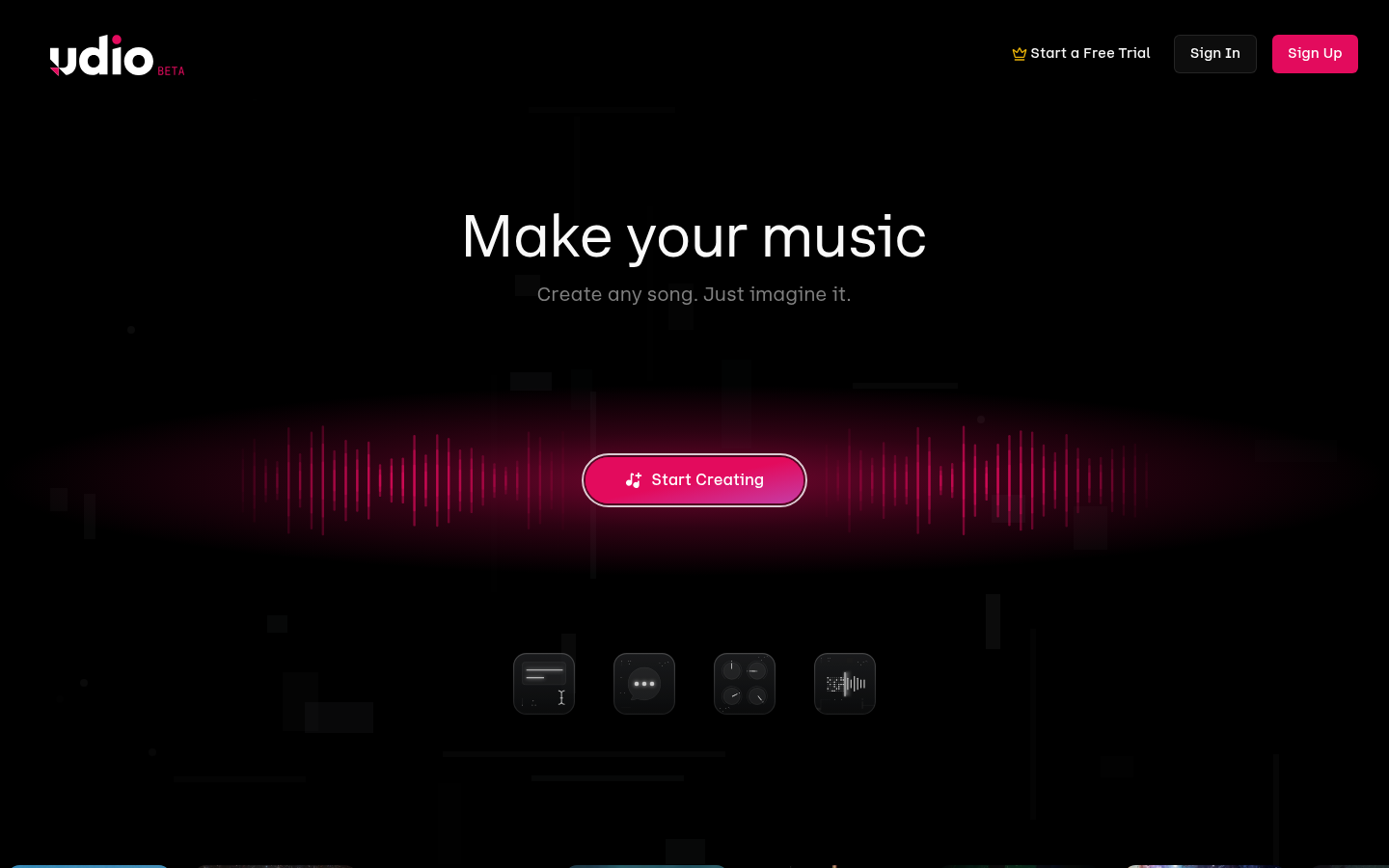
Udio
- 48kHz stereo output holds up better in professional mixing contexts than 44.1kHz rivals
- Timeline inpainting fixes one section of a track without regenerating the whole thing
- Extends compositions to 10 minutes with far less structural drift than most rivals
- UMG and Warner licensing settlement removes most day-to-day commercial-use ambiguity
- Vocals carry a slight digital sheen next to Suno's more natural phrasing
- Free tier gives roughly 3 songs a day, tighter than Suno's 50 daily credits
Best Suno alternative for instrumental-heavy and production work that needs longer, drift-free compositions.
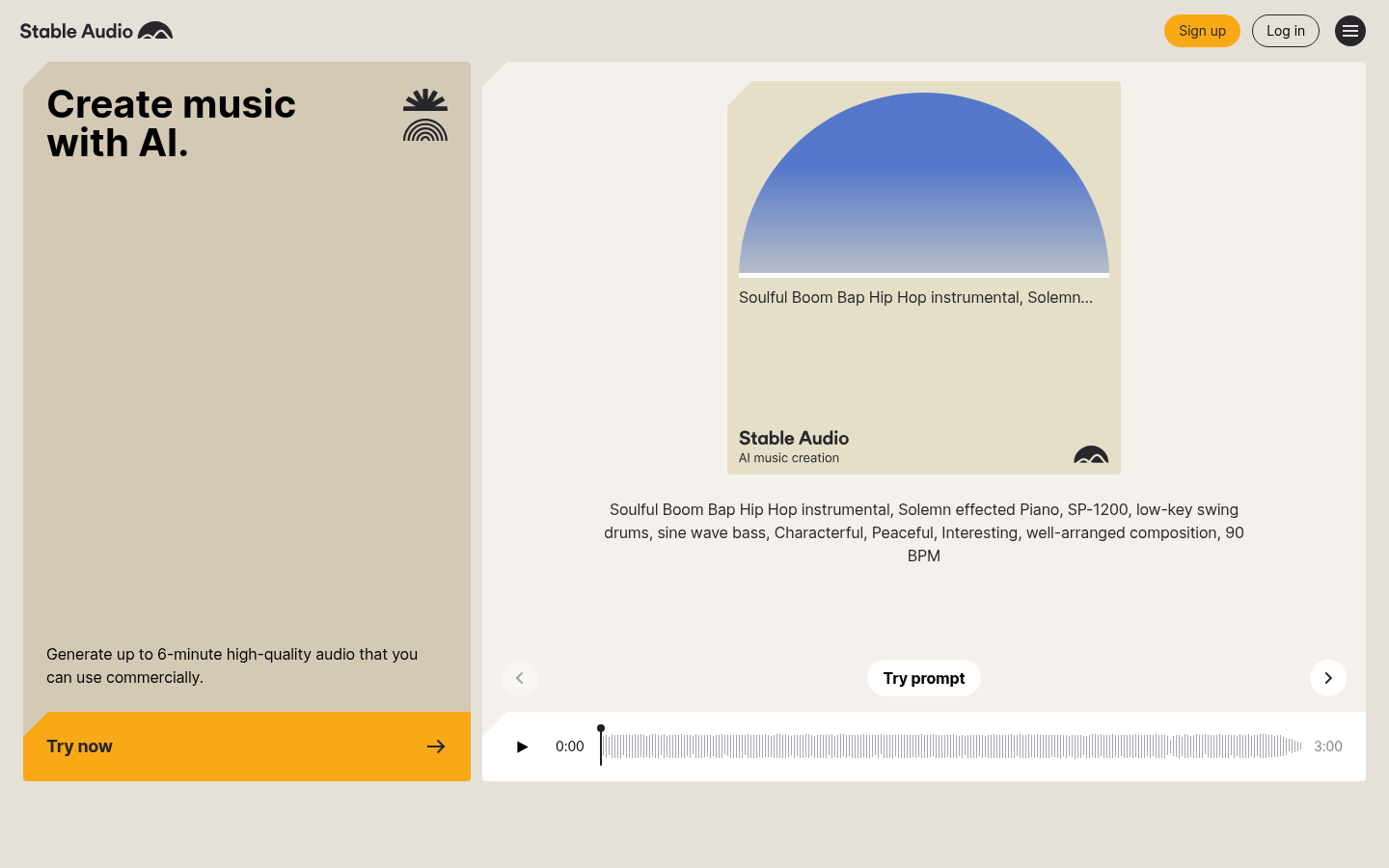
Stable Audio
- Trained exclusively on licensed audio, so there is no RIAA-style legal overhang to manage
- Audio-to-audio and inpainting cover sound design work beyond simple song generation
- Enterprise API tier gives game studios and ad agencies an SLA-backed integration path
- Not built for vocal-driven pop songwriting the way Suno and Udio are
- Consumer web app pricing is less transparent than the flat subscription tiers of its rivals
Pick Stable Audio when licensing certainty matters more than vocal realism.
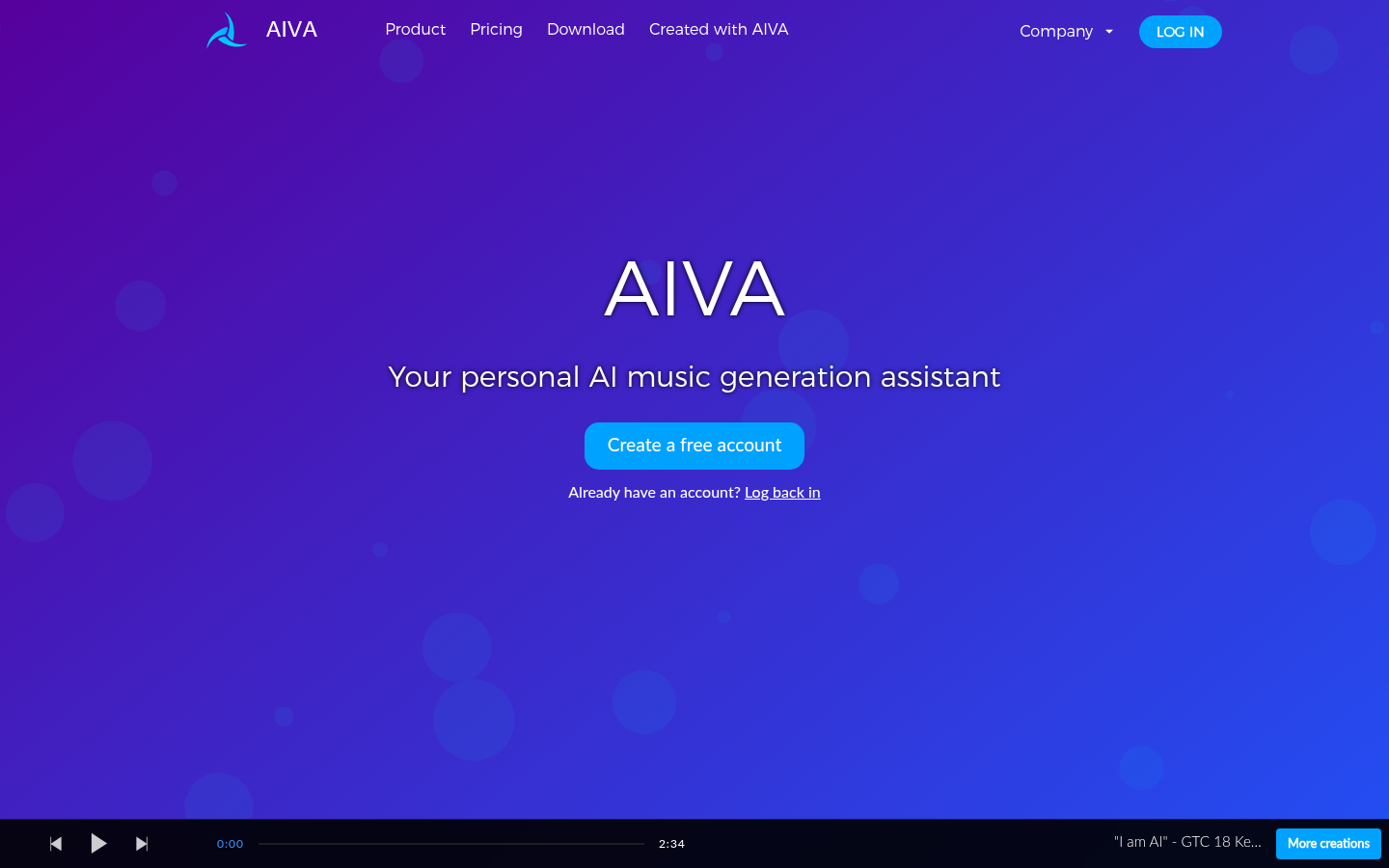
AIVA
- 250+ style presets built specifically for orchestral and cinematic scoring
- Piano-roll editor lets you fix melody, harmony, or instrumentation after generation
- Pro plan transfers full copyright to the user, not just a usage license
- No vocal generation at all, so it cannot replace Suno for sung tracks
- Standard plan caps monetization to YouTube, Twitch, TikTok, and Instagram only
The strongest pick for instrumental scoring, but it will not replace Suno if you need vocals.

Soundraw
- Trained only on Soundraw's own in-house catalog, so licensing risk is close to zero
- In-browser mixer lets you swap instruments and adjust section energy without a DAW
- Stem downloads are included, useful for editors who need to duck music under dialogue
- Melodic and drum-fill patterns repeat noticeably once you generate several tracks in one genre
- Billing is annual-only, and the year-long lock-in shows up often in user complaints
Reliable for background beds, but expect repetition if you need a lot of variety.
Verdict
Udio is the strongest overall Suno alternative once you are past casual use: longer tracks, cleaner instrumental separation, and a settled licensing position. Stick with Suno itself if vocal realism is the priority. Reach for Stable Audio, AIVA, or Soundraw specifically when licensing certainty or an instrumental-only workflow matters more than vocal quality.
How we tested
We compared Suno against four AI music generators actually built to compete with it, not filler picks pulled from a generic roundup. Pricing tiers were pulled directly from each vendor's own pricing page during the week of June 29, 2026. Audio specs (sample rate, max duration, stem support) were cross-referenced against hands-on testing published by Musci.io, Undetectr, and Singify, three outlets that ran both Suno and the alternative side by side rather than relying on vendor marketing copy. Commercial-licensing status was checked against public reporting on the 2024 RIAA suit and the 2025 label settlements, plus the newer 2026 disputes over artist compensation. We did not generate audio ourselves for this piece; every quality claim traces back to a cited third-party test.