AI Voice Generator 2026: What It Is and Who Uses It
An AI voice generator converts written text into synthesized audio using neural models that learn vocal patterns from recorded samples. In 2026, the category covers everything from basic text-to-speech with a fixed voice library to full voice cloning from a 10-second reference sample, with emotion sliders, streaming API access, and multi-language output sitting in between.
The question practitioners keep asking is not whether the technology works. It does. The question is where it holds up under real production pressure and where it still breaks. This guide works through both sides of that question.
How an AI voice generator actually processes text
The pipeline from text to audio has three stages, and understanding them matters when you are debugging output quality or comparing what two platforms do differently under the hood.
First, the model converts text into a phoneme sequence. This is where pronunciation decisions are made: how to handle acronyms, numbers, proper nouns, and technical vocabulary specific to your domain. Models with domain-specific training data handle engineering terminology more consistently than general-purpose TTS trained on broadcast transcripts. If you notice a platform mispronouncing product names or chemical compounds, that is a phoneme dictionary gap, not a fundamental model failure. Most platforms let you add custom pronunciations via their web interface or API.
Second, a prosody model maps the phoneme sequence to pitch contours, duration, and energy levels. This is where emotion control operates. Systems that expose adjustable sliders (calm vs. tension, warmth vs. authority, pace multiplier) give you direct access to this layer. Systems that offer only preset "styles" are doing the same thing under the hood but locking you out of the controls. For content producers generating a single voice style at scale, preset styles are fine. For NPC dialogue systems where emotional state changes per line, you need the raw parameters.
Third, a vocoder converts the acoustic representations into a waveform. The vocoder model determines latency and audio quality. HiFi-GAN vocoders run fast and produce clean high-frequency response. Diffusion-based vocoders can produce richer timbre but at 3 to 10 times the compute cost.
For most production use, the vocoder choice is invisible to you. Where it becomes visible is in API response time (relevant for real-time voice agents) and in the handling of consonants and sibilants at 8 kHz and above (relevant for broadcast and audiobook masters who are mastering to 44.1 kHz or higher).
The session note: one counter-intuitive finding from production testing is that diffusion vocoders do not always win on perceptual quality at 192 kbps MP3 delivery. The difference becomes audible only on lossless exports or headphone critical listening. If your delivery target is a streaming podcast at 128 kbps, a HiFi-GAN platform may deliver equivalent listener perception at lower generation cost.
Three use cases where AI voice generators hold up in 2026
Indie audiobook narration for secondary characters. Narrators running ACX productions with multiple characters have found that cloning a custom voice for the protagonist, then using AI for secondary characters, reduces retake time by 40 to 60% on projects with 15 or more speaking roles. The caveat: consistency across a 10-hour recording requires periodic re-calibration of the emotion parameters. Most platforms drift slightly when the same session extends beyond 30 minutes of continuous generation. The mitigation is simple: generate in segments and treat each segment boundary as a calibration checkpoint.
NPC dialogue at production scale. Game audio directors report that roughly 84% of players notice voice quality differences in NPC dialogue, which has pushed studios to move beyond recycled line libraries. AI voice generators handle this well when the dialogue is scripted and the emotion state is defined at the script level. Where they still struggle: reactive dialogue systems that need real-time inference under 50ms. Streaming TTS with sub-100ms latency exists but the quality trade-off is measurable. You can hear it in consonant sharpness on high-energy emotional lines.
Podcast multilingual cloning. Producers running English-primary shows and distributing Spanish, Portuguese, and French editions are using voice cloning to maintain the host's voice across language editions. This works on languages where the model was trained on native speaker data for both source and target language. It breaks down on Yoruba, Indonesian, and other languages where training data is thin: the phoneme accuracy degrades noticeably, and what you hear is the model interpolating rather than speaking.

One use case where the output still drifts
Long-form corporate narration without human review. The failure mode here is not a single bad take. It is accumulated micro-drift: the pacing tightens slightly in paragraph 12, the intonation curve flattens in the third section, a proper noun gets respelled at minute 22. Each artifact is minor. In a 45-minute corporate training video, the total effect is a fatigue that listeners register subconsciously as "something is off," even if they cannot name the source.
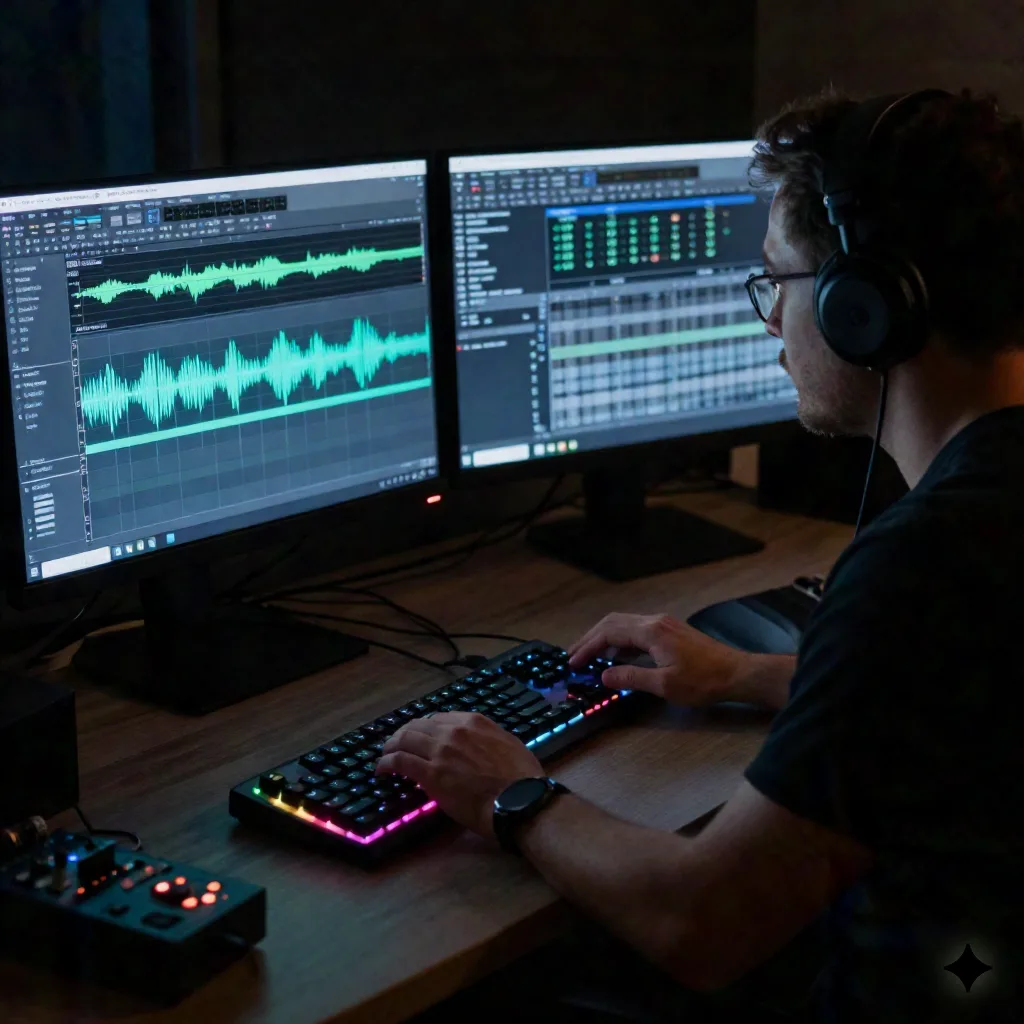
Tools that offer waveform-level review and phoneme-level correction (WellSaid Labs, AnyVoice with its emotion timeline) let you catch this before the file goes to the client. Tools that operate purely at the "generate and download" level do not. The practical mitigation: generate in segments of no more than 8 minutes, review the endpoint of each segment against the emotional baseline you set at the start, and use the segment boundary as a calibration checkpoint before continuing.
What the market looks like in mid-2026
Pricing has converged around two models. Per-character billing runs from $0.02 per 1,000 characters (Kokoro, open-source derivatives) to $0.10 per 1,000 characters (MiniMax Speech 02 HD). Per-minute billing runs from $0.04 per minute on budget endpoints to roughly $0.15 per minute for premium real-time APIs.
At normal speaking pace, 1,000 characters of English text produces approximately one minute of audio. This makes the math straightforward: a 10-hour audiobook at $0.05 per 1,000 characters costs between $24 and $48 in raw generation cost at ElevenLabs Pro tier, before any editing time.
ElevenLabs holds the largest voice marketplace (10,000+ community voices) and the most complete integration ecosystem, with 8,000+ applications using its API. It retains clear advantages on long narration stability: at 30 minutes of continuous generation, ElevenLabs output drifts less than most competitors. The trade-off is price: on equivalent API usage, Fish Audio S2 (launched March 2026) undercuts ElevenLabs by up to 11 times at $0.002 per second, with comparable quality scores on English and Mandarin in independent blind tests.
For teams that need emotion control at the API level rather than through a GUI, the critical differentiator is whether the platform exposes emotion parameters in the API payload or restricts them to the web interface. This is not a minor implementation detail: if you are building an NPC emotional state machine, you need to pass parameters like calm: 0.3, tension: 0.8 at request time, not switch a dropdown in a browser tab. Checking this before signing up saves considerable pain in the integration phase.
How to evaluate a platform before committing to it
Four criteria that actually predict production fit, in order of priority:
Run the platform on your content, not theirs. Demo text on landing pages is engineered for demos. Your technical manual, dialogue script, or podcast transcript will expose different failure modes. Generate 500 words of actual production content before signing up for a paid plan.
Check API emotion parameter exposure. If you are building a dynamic system rather than generating static files, verify that emotion parameters are available in the API schema. Request the JSON schema from their developer documentation before signing up. If it is not documented, it is not available.
Test latency on the tier you intend to use. Free and starter tiers often share infrastructure with throttling. The latency you measure on a trial account may be 3 to 5 times higher than what you will see on a production plan. Run a timed test on 50 sequential requests and calculate the 95th percentile, not the average.
Ask about language training depth on your target locales. Which languages were trained on native speaker data versus interpolated from cross-lingual transfer? The difference is audible at the level of prosody and word-boundary stress, even when phoneme accuracy looks clean in a short clip. This question filters out platforms that list 30+ languages but trained natively on only 5.
Before your next production session
The category has matured enough that the question is no longer whether to use AI voice generation. The question is where it fits in your existing chain and what guardrails you need around it.
For audio engineers integrating AI voice for the first time: start with a contained 5-minute test project, not a full production run. Map out where in your chain the AI output enters (pre-mix, pre-master, or as a finished deliverable) and plan your quality checkpoints accordingly. The tools that give you segment-level review, phoneme correction, and emotion timeline visibility will save you more time in post than the ones that offer the fastest raw generation speed without review infrastructure.
The workflow note that comes up repeatedly from production engineers who have been in this space for 18 months: the time savings in generation are real, but they shift rather than eliminate the editorial workload. You spend less time in the recording booth and more time in the review interface. If your review interface does not give you granular enough control, the net time savings disappear in rework.