Objective Summary: What It Is and How Narrators Use It
Summary
An objective summary is a brief, bias-free description of a text's core argument and supporting points. Audio producers and narrators use it as a pre-session calibration tool: after writing one, they know the emotional register, pacing intent, and structural logic of the material before hitting record. This article covers the definition, a 5-step workflow, and three production contexts where the technique changes output quality, including how it affects AI voice emotion parameter decisions.

An objective summary is a concise, neutral restatement of a text's main argument and key supporting points, with no editorial opinion and no personal interpretation. For audio producers and narrators, it is also one of the most underused pre-production tools in the pipeline. Before you record a chapter, generate a voice clone, or set emotion slider parameters, writing a 100-word objective summary of the source material changes how you read the text and what decisions you make in the session.
What an objective summary actually is, and what it is not
An objective summary restates the main thesis of a piece of content and its key supporting points. The word "objective" carries the weight here: the summary contains no opinion, no judgment, no interpretation beyond what the original author stated. You are not reviewing the work. You are not responding to it. You are distilling it.
Three elements make a summary objective:
Main idea: The central argument or theme the author is making
Key supporting details: Two or three facts, examples, or data points that reinforce the main idea
Conclusion or outcome: What the text resolves to, recommends, or decides
The format is typically a single paragraph of 80 to 150 words, written in your own words. No direct quotes. No "I think." No adverbs that signal a stance, such as "surprisingly" or "importantly" used as a claim rather than a factual qualifier.
Here is what that constraint rules out: an objective summary of a chapter arguing for strict climate policy does not say "the author makes a compelling case" or "the data is alarming." It says "the author presents three peer-reviewed studies showing X, Y, and Z, and concludes that policy intervention is necessary to achieve outcome A." That level of neutrality is harder to maintain than it looks. Practicing it as a production discipline has measurable effects on narration consistency and AI voice calibration accuracy.
Why audio narrators write objective summaries before recording
I started writing pre-session summaries in 2024 after a difficult run on a 14-chapter crime novel. Each chapter opened with a different POV character, and I was going into sessions without a structural read on who was driving the scene emotionally. Two chapters in, I would realize the register was off and go back. That cost me six hours across a two-week production.
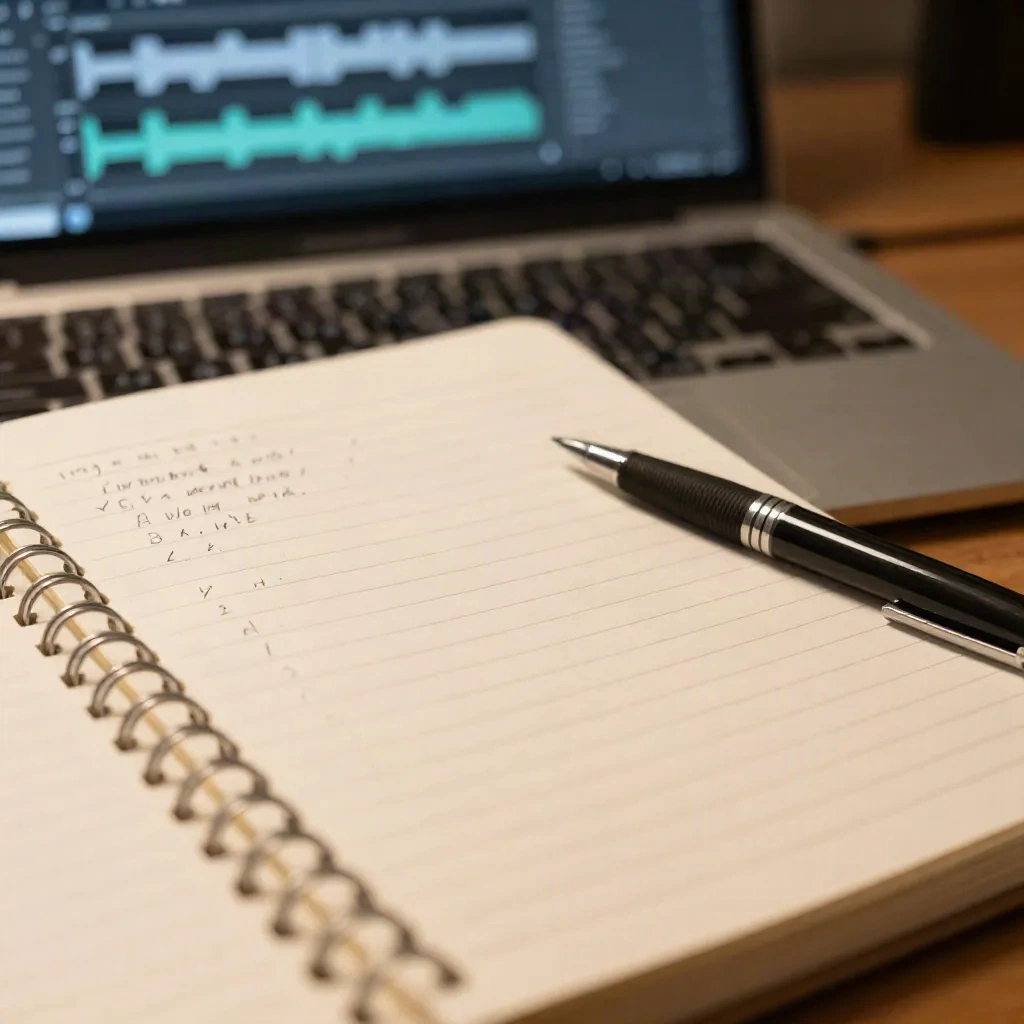
The fix was straightforward: before loading any chapter into the session, write a 100-word objective summary of it. Not a reading journal. Not a character sketch. A neutral distillation of who the POV character is, what they want in this scene, what actually happens, and what information the reader needs to retain for the chapters ahead.
Two effects showed up within the first week. Pacing decisions became faster because I had already organized the structure in my head before opening the session file. And when I started using voice cloning for secondary characters, the summaries gave me a calibration reference I could check before setting any emotional parameters. A well-written objective summary tells you the tone floor and tone ceiling of a passage before you commit to a performance. That is its practical value.
How objective summaries change your emotion slider calibration
This is where the technique connects directly to AI voice production.
When you use parameter-driven voice control, whether that is AnyVoice's 8-slider emotional state system or any comparable interface, you need to know the emotional range a passage actually requires before you set a single value. The problem with skipping this step: most producers go straight from first read to generation, which means slider settings are based on a first-pass impression rather than a considered analysis of the source material.
Writing an objective summary forces the inverse workflow. You have to identify the main idea before you can summarize it, which means the text's structure is already organized in your head by the time you open the generation interface. At that point, you know whether the passage calls for high or low emotional intensity overall, where tension builds and where it resolves, and whether pacing should compress or expand across the section.
The summary also provides a written reference you can check mid-session. Instead of re-reading 3,000 words because a generated take sounds slightly wrong, you check the 100-word summary and identify which structural element the parameter setup is missing.
Session note: For a 3,000-word non-fiction chapter, writing an objective summary takes about 8 minutes. The time recovered on calibration and reduced retakes typically runs 25 to 40 minutes per chapter on complex material. The math holds above 5,000 words of source material; below that, the return is smaller but still positive.
A 5-step workflow for audio production
Step 1: Read the full material before touching any interface.
No timestamps, no notes during the first pass. This read is for comprehension, not extraction. Give the source material the same attention you would give a client brief before a meeting.
Step 2: Write the central argument in one sentence.
What is the main point of this chapter, scene, or document? Write it out. This sentence becomes the opening of your objective summary and the anchor for every calibration decision that follows.
Step 3: Identify two or three supporting details.
What evidence, events, or examples does the source use to support the central argument? Keep only the structurally necessary ones. Leave out illustration and color. Those are details the listener will encounter directly in the recording.
Step 4: Write the summary in neutral present tense.
"The author argues..." or "The chapter establishes..." or "The protagonist decides..." Avoid "I feel this passage..." or "This is a tense scene where..." Those are readings, not summaries. The neutral register is not just a stylistic rule; it is what forces you to separate your interpretation from the author's intent.
Step 5: Extract your production parameters.
Below the summary, add a two-line production note: emotional intensity level (low, medium, or high), pacing direction (compressed, balanced, or expansive), and any character-specific calibration flags. This becomes your session brief before you open any voice generation interface.
Where AI tools fit in the objective summary workflow
Several AI transcription and note-generation tools now produce automatic summaries of audio recordings. This matters for producers who work from voice memos, interview recordings, or rough audio drafts rather than clean written scripts.
Krisp removes noise artifacts from raw recordings before any AI summary layer processes the signal, which directly affects the accuracy of the resulting notes. TicNote generates structured notes from captured audio, including action items and key themes. What neither tool produces on its own is an objective summary in the narration-prep sense. They generate meeting-style or document-style summaries that do not map directly to voice production parameters.
The gap you fill manually: taking the AI-generated summary and translating it into voice calibration language. With a practiced workflow, that is a 5-minute step, not a 20-minute one. The AI tool handles extraction; you handle production interpretation.
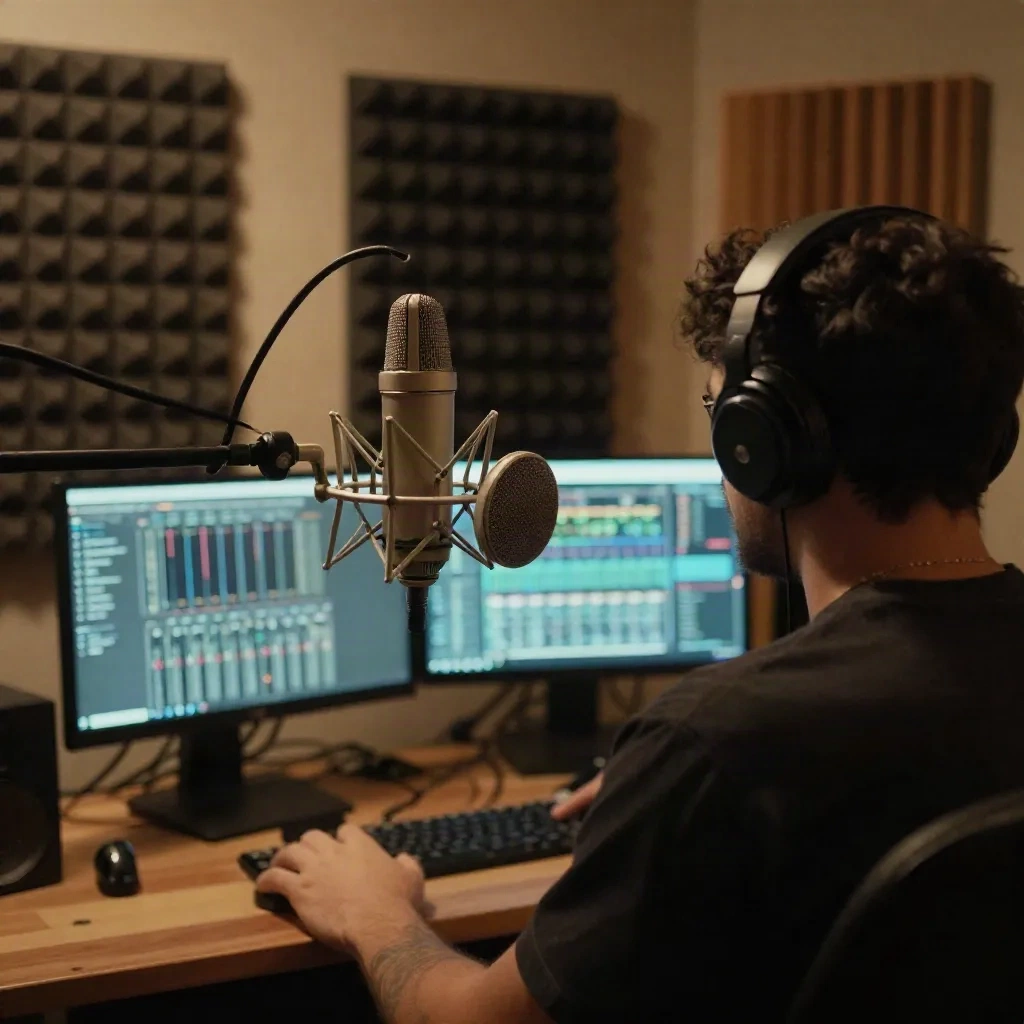
For audiobook and voice cloning work, running a test generation pass at neutral emotional settings, then adjusting based on what the objective summary tells you the passage requires, gives you a more defensible calibration decision than adjusting by ear alone. Fish Audio's pricing structure, starting at $5.50 per month on annual billing, makes that test-pass workflow economically viable at high chapter volume.
Three use cases where this holds up, and one where it does not
Audiobook production (holds up well). For chapter-length content with a clear narrative arc, the objective summary workflow scales reliably. It is most valuable in non-fiction where the author's argument structure carries more weight than emotional performance interpretation. In fiction, it helps most on POV-switching narratives where the emotional register changes chapter by chapter and the calibration risk is highest.
Multilingual podcast cloning (holds up well). When preparing content for voice cloning across multiple languages, writing an objective summary in English first gives you a language-neutral production reference. The emotional register and pacing decisions you extract from it transfer across language versions without requiring a separate structural analysis of each translated script.
Game NPC dialogue (holds up with modification). Individual NPC lines are rarely long enough to warrant a full objective summary. The technique scales down: before generating a 300-line NPC dialogue batch, write one sentence describing who this character is and what they want in this scene. That two-minute step improves emotional consistency across the entire batch without adding significant session overhead.
Short-form social content (does not hold up). For 15-to-30-second scripts written for social distribution, the objective summary process adds overhead without proportional return. The text is short enough that a careful first read gives you the same structural information. Apply the time elsewhere.
Before your next session
Write a 100-word objective summary of the next piece of content you are about to produce. Not a review, not a reading response: a neutral factual distillation of the main argument and two or three supporting points. Time how long it takes. Then check whether your parameter calibration felt faster or slower than a comparable session without one.
For most producers working on content longer than 2,000 words, the data points consistently in one direction. The technique adds 8 to 12 minutes of structured reading time per chapter and recovers 20 to 40 minutes of calibration and retake time. That exchange rate holds across audiobooks, podcast pipelines, and NPC dialogue batches at the volumes where voice cloning starts to make economic sense.