What Is Gabber Music? Kicks, Tempo and Vocal Craft
Summary
What is gabber music? It is a style of hardcore techno born in Rotterdam in the early 1990s. Its identity rests on a heavily overdriven kick drum clipped into a pitched, near square wave, tempos of roughly 160 to 190 BPM, dark samples and roared or pitch-shifted vocals. For producers, the kick leads and the voice is a texture to gain-stage, distort and carve into the gaps. AI voice suits raw hooks and scratch takes, never unconsented clones.
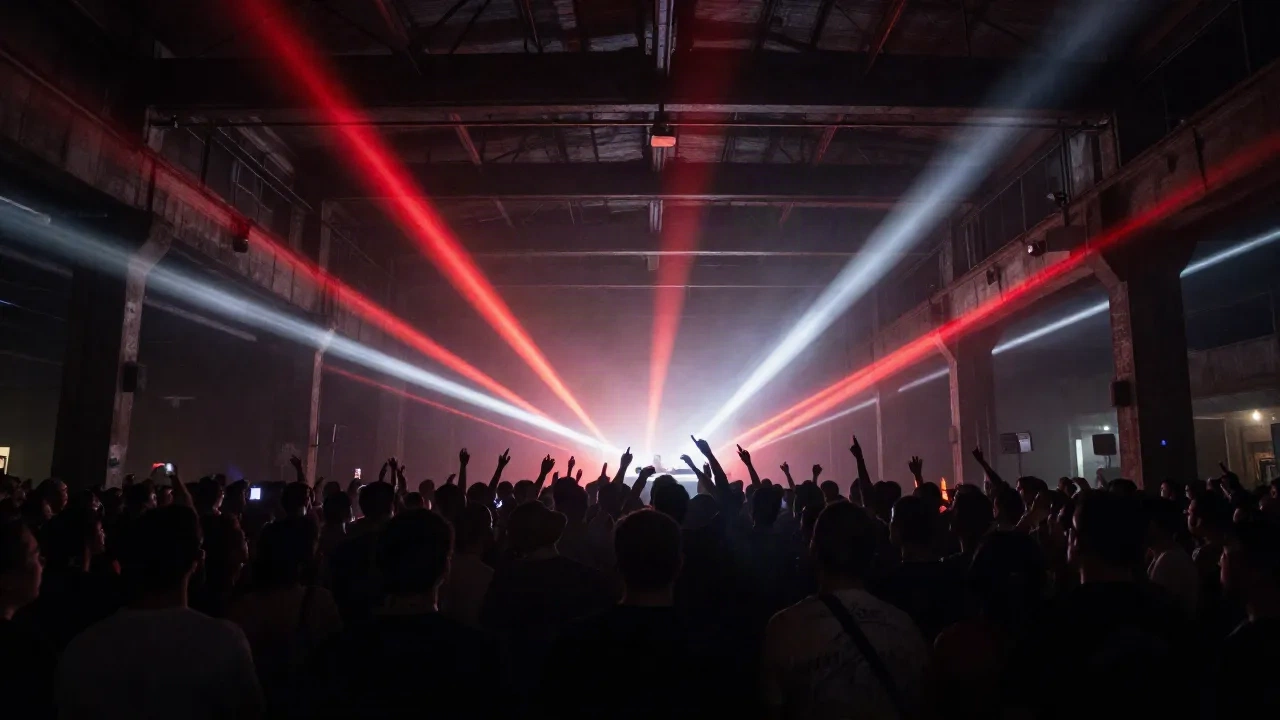
Gabber is a style of hardcore techno from Rotterdam, built on a heavily distorted kick drum, tempos of roughly 160 to 190 BPM, dark samples and roared or shouted vocals. It appeared in the early 1990s and grew into a full subculture with its own parties, dance style and labels. If you are asking what is gabber music for production reasons, the short version is this: the kick is the lead instrument, and the voice is a texture you abuse on purpose.
Where did gabber come from?
The scene took shape in Rotterdam in the early 1990s, with producers such as Paul Elstak, DJ Rob and The Prophet working alongside Marc Acardipane, whose output sits in the same early hardcore family. It grew out of house, techno and New Beat, then pushed all three faster and harder. Rotterdam Records, Mokum Records in Amsterdam, Pengo and the New York label Industrial Strength gave it a release pipeline. According to Wikipedia's gabber entry, T99's "Anasthasia" (1991) already contains one of the genre's most characteristic components.
The word itself is Amsterdam slang, borrowed through Yiddish from the Hebrew chaver, "friend". Elstak famously etched "Gabber zijn is geen schande!" ("It's not a disgrace to be a gabber!") into the first Euromasters record in 1992. That line tells you the social context: a working-class scene that had been looked down on by the polished house crowd, and decided to wear the label anyway.
By the mid-1990s it had gone mainstream in the Netherlands. ID&T's Thunderdome parties drew crowds of up to 40,000, and Billboard called gabber the country's first homegrown youth culture in 1997. The sound then spread to the UK, Italy, Spain, the US and Australia, and came back into clubs in the late 2010s.
What does the gabber scene look like on the floor?
Gabber is also a dance and a dress code. Wikipedia documents hakken, a fast-legged gabber dance style, and the genre's visual identity of tracksuits, shaved heads and sneakers is as recognizable as the kick. The scene also has a darker footnote: a small far-right following in the 2000s tried to claim it, and that attempt was short-lived. Most of the community rejects it, and so do we.
The party format matters for production. Tracks are written for huge rooms with enormous low end, which is why the kick carries so much of the identity and why vocals have to cut through a wall of sound rather than sit politely in a mix.
How fast is gabber, and what counts as the genre?
Tempo is where sources disagree, so here is the honest range. Wikipedia gives 140 to 190 BPM as a general figure. Its mainstream hardcore article says most gabber today is produced at 160 to 180 BPM, a little slower than the mid-1990s Rotterdam style, and gives 165 to 180 for mainstream hardcore itself. Offshoots such as uptempo hardcore and speedcore go well past 200.
Our working rule for sessions: if the kick is distorted into a pitched tone and the tempo sits between 160 and 190, you are in gabber territory. Below that you are drifting toward techno or industrial. Above 200 you have left for speedcore.
The session note: at 180 BPM a quarter note lasts about 333 ms. Your kick tail has to be gone, or tuned into the bass, before the next hit lands.
Why does the gabber kick sound the way it does?
The signature element is a bass drum overdriven until it clips into something close to a square wave. Clipping flattens the peaks, adds harmonics and gives the kick an audible pitch, which is why gabber kicks can be tuned to the key of a track. A Roland TR-909 kick was a common starting point, and the Alpha Juno is also named as a source.
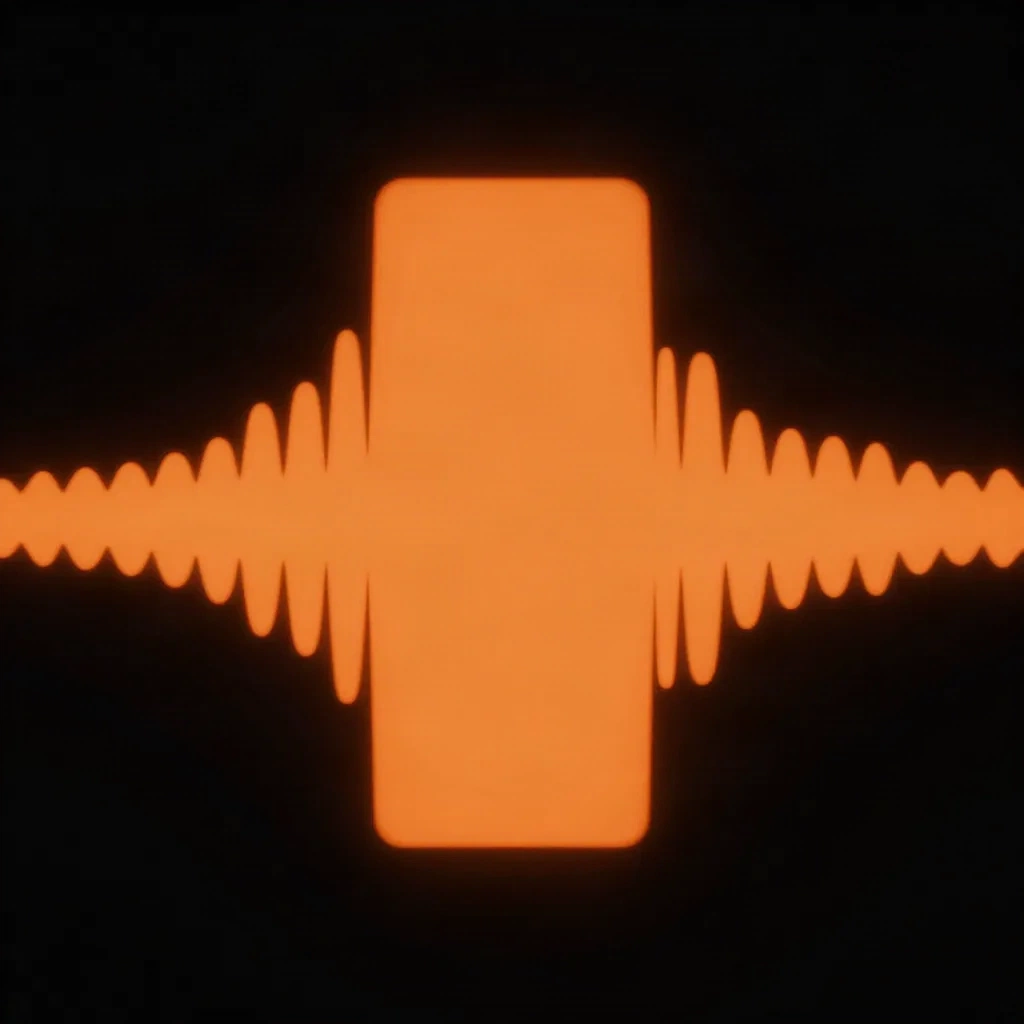
Producers in the early days overdrove mixer channels and distortion pedals, and some of the classic kicks came from feedback. Digital workflows reproduce the same idea with a 909 sample, hard gain, waveshaping, EQ and light compression. Forum practitioners on Gearspace and Renoise repeat the same advice: pick a sample with a long decay, tune it to the track, and keep compression modest so the attack survives. Treat those numbers as anecdotal, not gospel.
Here is what the distortion does to the spectrum, and why it matters later when vocals arrive:
More harmonics. The kick fills the low mids, not just the sub, so it competes with voices.
More sustain. The tail carries tone, so it needs tuning or ducking.
Less dynamic range. The kick is loud on every hit, which squeezes headroom for everything else.
What do vocals do in a gabber track?
Gabber vocals are rarely sung. They are shouted, roared, pitch-shifted or chopped from film dialogue. Wikipedia's mainstream hardcore article notes that the lyrical themes of violence, drugs and profanity are often screamed, pitch shifted or distorted, and Joe Muggs summed the genre up in The Guardian in 2020 as "a relentless mix of superfast BPMs, distorted kickdrums and roared vocals". Mixmag's feature on the revival shows how much of that roar is still the draw.
In practice the genre uses three vocal roles:
The MC. A live voice on top of the track. Rotterdam Terror Corps worked this way, with DJ Distortion on the music and MC Raw on the microphone.
The shout sample. A short phrase, often one or two words, looped as a rhythmic hook.
The film or speech clip. A spoken line dropped in for atmosphere, frequently pitched down and saturated.
Neophyte's "Braincracking" (1996) is a good reference for how a distorted kick and a shouted vocal trade places in a mix. Listen to where the shout sits: it is not above the kick, it is cut into the gaps the kick leaves.
The session note: roared vocals clip the same way the kick does. Gain-stage the vocal before the distortion, not after, or you lose the consonants.
How do you keep a vocal intelligible next to that kick?
This is the practical problem, and it is the same one game audio and podcast engineers solve every day: a loud, harmonically dense bed that eats speech. Three moves hold up.
Carve the low mids. Because the distorted kick spreads energy into the low mids, high-pass the vocal higher than you would in a normal pop mix, then add presence around the consonant range so words still read.
Sidechain the vocal, not just the bass. A short duck on the vocal bus triggered by the kick keeps the shout punching through the gaps. At 180 BPM the gap is tiny, so use a fast release.
Distort the vocal separately. Saturation on a parallel copy keeps the clean transient while the dirty copy supplies grit. It is the same layering trick producers use on the kick itself.
Where does AI voice fit into gabber production?
This is our angle at AnyVoice, and we will keep it narrow. Gabber is a producer-driven genre that already treats the voice as a sample. That makes a few AI voice workflows genuinely useful, and a few of them a bad idea.
Where it holds up. Generating dozens of shout and chant variants to audition as rhythmic hooks. Producing a spoken intro or a mock film-dialogue clip in a given language and tone. Fast scratch vocals while you are writing, replaced later by a live MC. With a platform like ElevenLabs you can render speech-style lines quickly, and Fish Audio offers cloning from a short clip plus text-tag control of delivery. Expect the output to need the same heavy processing as any other vocal.
Where it does not. A clean synthetic line does not carry the strain of a roared take, and no slider replaces a live MC pushing a mic. Generated vocals are strongest as raw material you then clip, pitch and saturate, which is why a pitch-shifted, distorted result hides most synthesis artifacts. That is a feature of the genre, not a proof of quality.
Where it is off limits. Do not clone a real MC or a recognizable voice without written consent. Several jurisdictions, including California and the EU under its AI Act, are tightening rules on voice likeness. Gabber has a documented history of sampling culture, but a cloned voice is not a sample. It is a person.
If your source is a rough field recording, clean it first. A noise-removal pass such as Krisp on a spoken reference saves you from cloning room noise into every generated line.
Producers releasing in several markets can also use dubbing tools such as Vozo AI to localize a promo or documentary-style intro, keeping the cloned voice consistent across languages.
Is gabber the same as hardcore, hardstyle or speedcore?
Not quite. The terms nest, and they get confused constantly.
Gabber (Rotterdam): about 160 to 190 BPM. Distorted, pitched kick, shouted vocals, dark samples.
Mainstream hardcore: 165 to 180 BPM. Cleaner production, gabber-descended, festival scale.
Uptempo hardcore: above 190 BPM. Faster, with more melodic leads.
Speedcore: 200 BPM and beyond. Extreme tempo, often noise-heavy.
Hardstyle: slower, usually around 150 BPM. Reverse bass and a more tonal kick.
Tempo figures here follow the ranges above, and the hardstyle number is a rough guide, not a rule. Overlaps are common, and artists move between labels depending on the release.
Before your next session
If you are new to the genre, start with three listening steps: an early Rotterdam Records or Mokum release, a Thunderdome-era Neophyte track, and a recent mainstream hardcore set. Notice what the kick does in each, then notice where the voice sits.
If you are producing, the checklist is short. Tune the kick to the key. Gain-stage the vocal before distortion. Carve the low mids for words. Use AI voice as raw material for hooks and scratch takes, and keep consent clear for anything that sounds like a real person.
Gabber rewards commitment. Pick a tempo, commit to the distortion, and make the voice earn its space.