What Is Stem Separation and Why Audio Producers Need It
Summary
Stem separation is the process of decomposing a mixed audio recording into individual components using AI neural networks trained on audio patterns. Modern tools achieve professional-grade results but carry inherent limitations: shared frequency content produces artifacts that no algorithm fully eliminates. For audio engineers and voice producers, stem separation has become a core workflow step for sample prep, remix work, vocal isolation, and clean input capture for voice cloning.
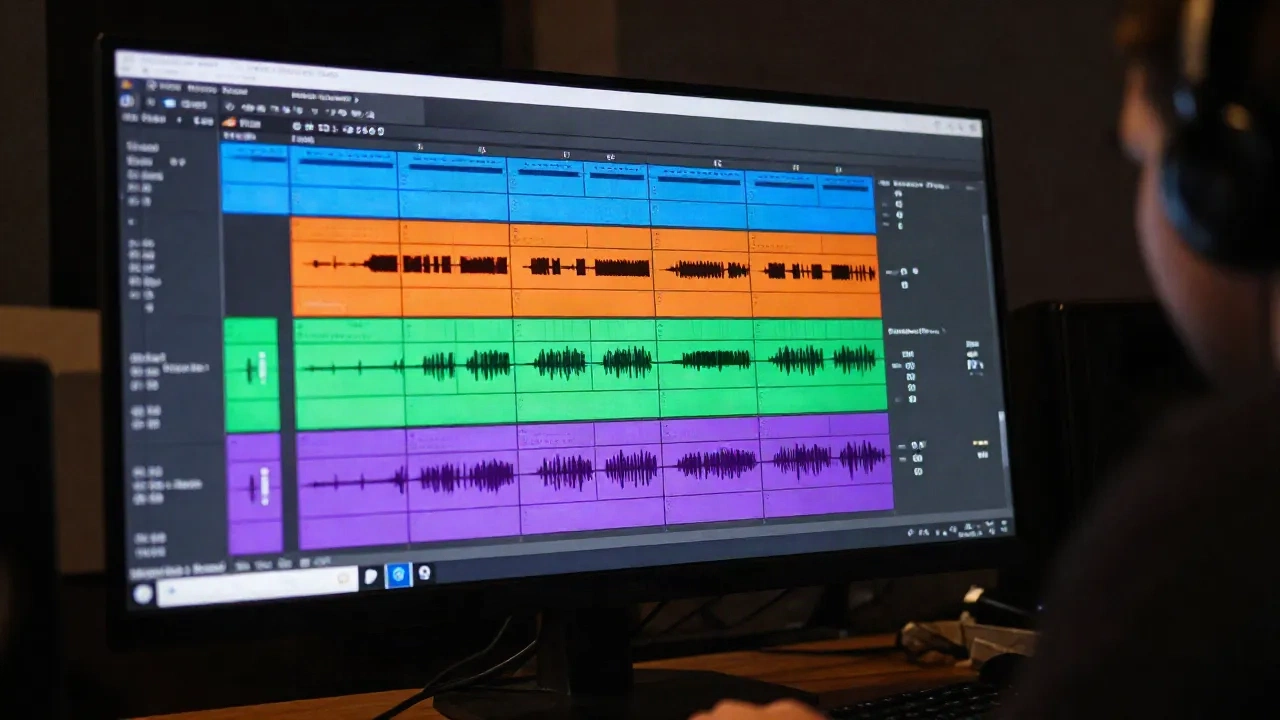
Understanding what is stem separation starts with a simple premise: you have a finished mix and you want its parts back. Stem separation is the computational process of decomposing a fully mixed audio recording into its individual source components. You feed a stereo or multi-channel mix into a neural network trained to identify each sonic layer. The output: separate audio files for vocals, drums, bass, and instruments, each exported as an independent track you can process, silence, or remix independently. As of 2026, the technology is precise enough for professional use in most production scenarios, with specific and well-documented failure modes on synthesized content and complex mixes that every practitioner should understand before relying on it.
The term "stems" has been used in studio engineering for decades. In a traditional session, stems are pre-mixed submixes delivered by the mixing engineer, one per element group. What stem separation tools do is attempt to reverse-engineer those submixes from a finished master, which is a fundamentally different and harder problem than working from the original session files.
The four standard stems and what ends up in the "other" bucket
Most tools output four categories by default: vocals, drums, bass, and "other." That last bucket stores everything the algorithm cannot confidently assign to the first three, including piano, synths, guitar, orchestral strings, sound effects, and anything that does not match a learned instrument archetype cleanly.
Logic Pro 11.2 (tested on Apple Silicon) supports six stems, adding guitar and piano as separate extraction targets. MusicRadar's 2026 benchmark, which tested 11 tools head-to-head, scored Logic at 16 out of 20, the highest in the group, with particular marks for impeccable recognition accuracy and minimal guitar degradation during vocal extraction.
The six-stem model matters for producers working with band recordings. For voice-only work, the two-stem model (vocals isolated versus everything else) is often sufficient and produces cleaner separation because the model has fewer competing assignment decisions to make. We have seen the two-stem pass outperform four-stem on voice quality consistently when the source material is voice-plus-music rather than a full band mix.
How modern neural networks learned to unmix sound
Early separation methods relied on frequency filtering. If a kick drum lives mostly at 60 to 120 Hz and a vocal at 200 to 4000 Hz, a naive filter can attempt to cut between them. The artifacts from this approach were severe: phasing, comb filtering, timbral damage that made results unusable at professional quality levels.
The current generation of tools uses deep neural networks. Demucs, the Meta AI research model that underpins several commercial tools, treats the problem differently. Rather than filtering by frequency, it learned what each instrument looks like across time, frequency, and the stereo field simultaneously, trained on thousands of multi-track recordings. The model separates components even when they overlap in frequency, which acoustic instruments almost always do.
LALAL.AI's latest Andromeda model was trained on four times the data of its previous version. In comparative testing, it scores highest on drum separation, specifically on transient punch and kick clarity.
Session note: Real-time separation is now viable. zplane's Peel Stems 2 plugin achieves stem separation at a 245ms latency, which opens live performance and broadcast applications that were impractical before 2025.
What stem separation cannot fix: artifacts, leakage, and synthesized elements
The MusicTech 2026 benchmarks state plainly: "the truth is there are variations from track to track, and some are better at certain instruments than others."
The artifacts you are most likely to encounter, in order of frequency: instrument leakage (elements of one stem bleeding into another), timbral shifts (the isolated vocal sounds slightly different from the source because frequency content was redistributed), reverb tail distortion (shared ambience gets split inconsistently), and in worst cases, metallic digital whistles on sustained notes.
Synthesized instruments present a systematic problem. AI separation models trained on acoustic multi-track sessions have no reliable concept of a synthesizer generating a melody that overlaps in frequency with the bass. Testing shows electronic music suffers more than acoustic recordings. Polyphonic synthesizers are regularly misclassified or split across multiple wrong stems.
The practical rule: stem separation works on the prediction that the input resembles what the model trained on. When it does, results are very good. When it does not (heavily processed vocals, extreme pitch shifting, saturated synth leads), expect leakage at the stem boundaries.
Stem separation in practice: remixing, sampling, and vocal isolation
For producers building remixes, stem separation gives access to isolated elements from tracks that were never delivered with session files. You pull the vocal from a release, clean it, and place it over your own production. Legally this is a separate conversation, but technically the workflow is now accessible on a standard laptop without specialist hardware.
For sample-based producers, the bass stem from a vintage funk record lets you lift a groove without the rest of the frequency content muddying your mix. What previously required expensive drum machines and heavy EQ work now takes a few minutes of processing.
For broadcasters and podcast producers using archival recordings, stem separation lets you reduce background music under a voice without the destructive cuts that characterized older approaches. You do not get silence where the music was, but you get attenuation that, combined with post-processing, produces acceptable results for spoken word contexts.
For mastering engineers handed a client mix without session files, separation offers a last-resort repair path. If the kick drum is buried and the client cannot provide stems, a separation pass can give you an isolated drum signal to process independently before rebalancing. The results are imperfect but often better than trying to notch-filter around a frequency that shares space with the bass guitar.
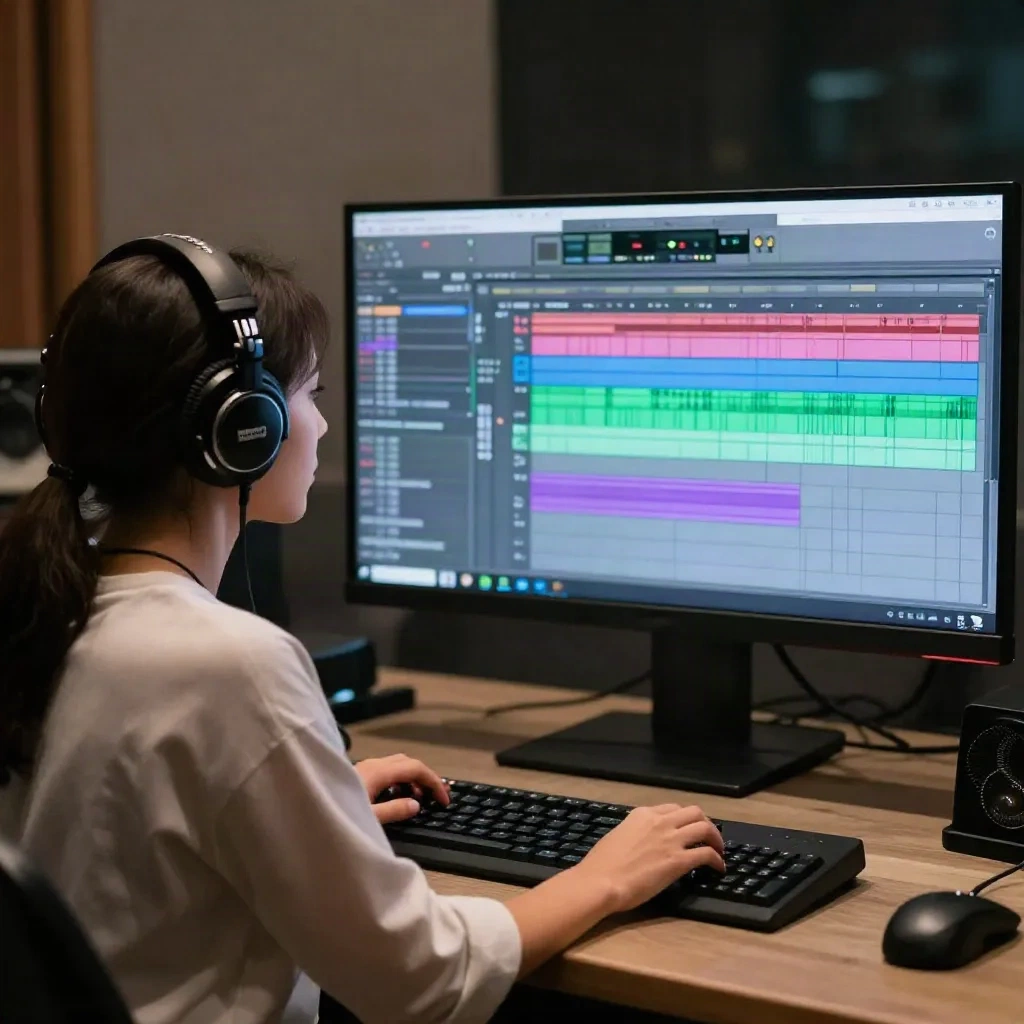
Using clean vocal stems for voice cloning: a pipeline note
This application is rarely covered in general stem separation guides. It matters directly if you are building voice clones for AI narration, NPC dialogue, or multilingual audio production.
Voice cloning models train on reference audio. The cleaner and more consistent the sample, the higher the accuracy of the resulting clone. When a client delivers a recording that contains background music, room reverb, or noise from a previous broadcast, stem separation gives you a first pass at isolation before you run additional noise reduction.
The result is not identical to a dry studio recording. Stem separation is prediction, not reversal. But it narrows the gap between mixed audio found online and an acceptable cloning sample significantly. In our own workflow testing, stem-separated samples consistently produced better phonetic accuracy on sustained consonants, where leakage from musical harmonics causes the most confusion in clone training.
The workflow that holds up: stem separation for vocal isolation, then iZotope RX for de-reverb and de-noise, then manual QA on segments with obvious artifacts, then clone training on the cleaned file. This adds 30 to 60 minutes of prep per reference recording, but reduces retake cycles in clone quality review by roughly half.
Choosing a tool: what the 2026 benchmarks show
The MusicRadar head-to-head test of 11 tools gives a usable decision matrix for different production scenarios.
Logic Pro (built-in): Best overall for six-stem extraction on acoustic and band recordings. Apple Silicon acceleration makes it fast. macOS only. If you are in that ecosystem and doing band-style separations, this is the starting point.
SpectraLayers Pro 12: Highest processing depth, with adjustable separation accuracy. Supports lossless processing. The manual spectrograph editing tools let you fix leakage that automated passes miss. Best for restoration work and archival projects where accuracy matters more than speed.
LALAL.AI: Strongest on drums and bass separation. Ten extraction types, including niche targets like backing vocals only. The per-stem payment model becomes awkward when processing large libraries regularly.
Ultimate Vocal Remover (UVR): Free and open-source. The MDX-Net mode delivers what MusicRadar describes as entirely lossless vocal isolation in their test. The limitation is that it extracts only vocals versus full multi-stem. For voice-focused workflows, this is a serious tool at zero cost.
MVSEP: Web-based. Superior vocal smoothness using the bs_reformer algorithm on MusicTech's vocal tests. Slower because it runs server-side, but requires no local installation.
For voice cloning prep specifically, the UVR MDX-Net mode or MVSEP's vocal output will give you the cleanest isolated vocal track to feed into iZotope RX as the second processing pass. Logic Pro's vocal stem is excellent but benefits from the same RX follow-up step when the target is cloning rather than remixing.
Before your next session
Stem separation is a solved problem at the professional-use level, with known failure modes on synthesized content and complex mixes. Understanding those failure modes is what separates a practitioner who uses the tool well from one who gets frustrated when stems bleed.
For voice production workflows, the immediate application is sample prep for voice cloning from source audio that was not recorded in a controlled studio. That use case alone justifies having at least one separation tool in your pipeline. UVR is free, MVSEP costs nothing for moderate volume, and Logic Pro's built-in is already there if you are on macOS.
The deeper application is using stem separation in post-production on cloned voice output: isolating the AI-generated vocal from a mixed test render to benchmark phoneme accuracy before committing to a full-length generation. That workflow is worth a session of its own.